|
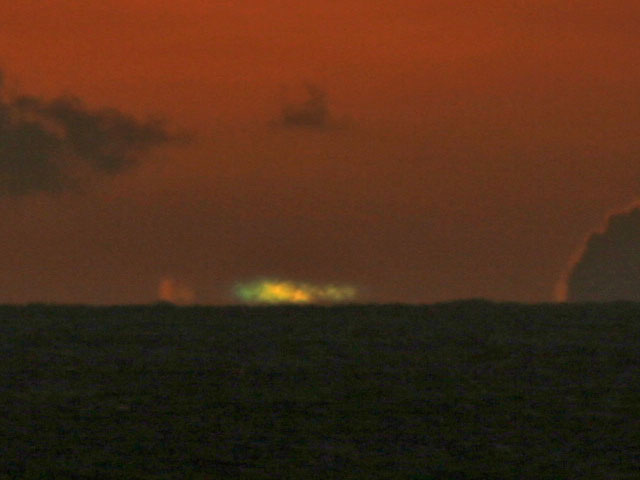
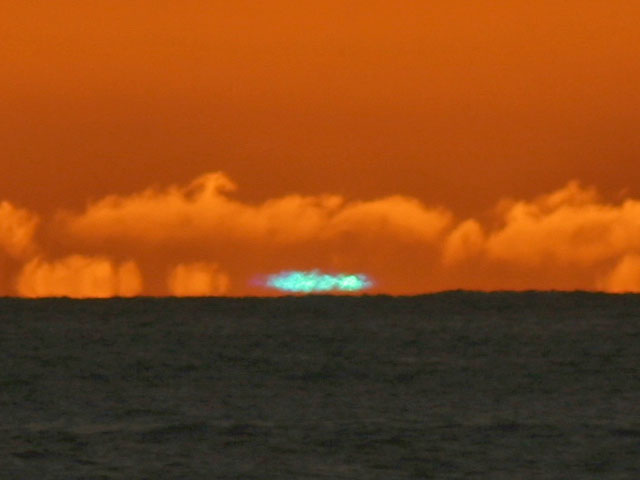
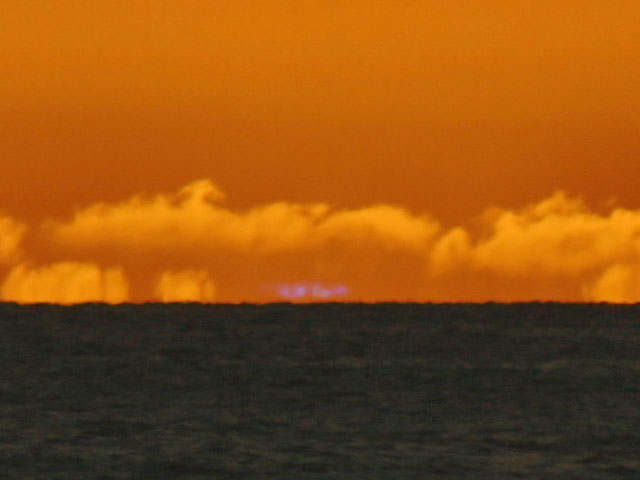
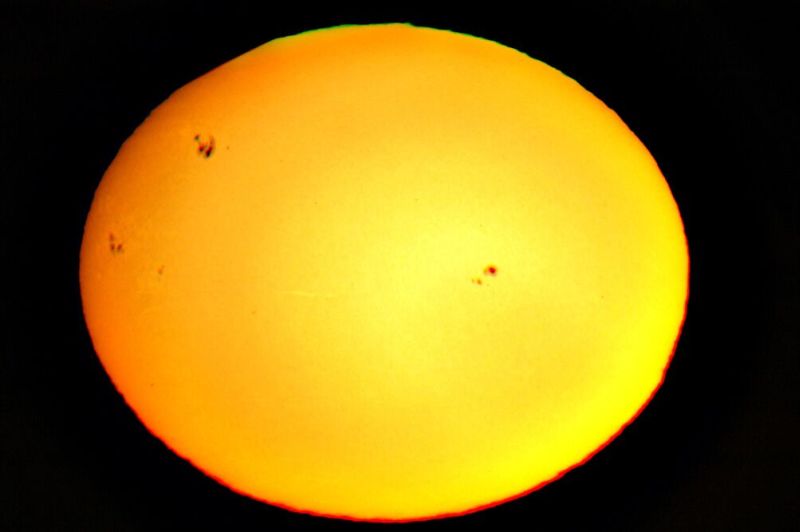
The 'green and blue flash' Kauai (Hawaii) October 2004 Photos by Martin Rietze
|
|
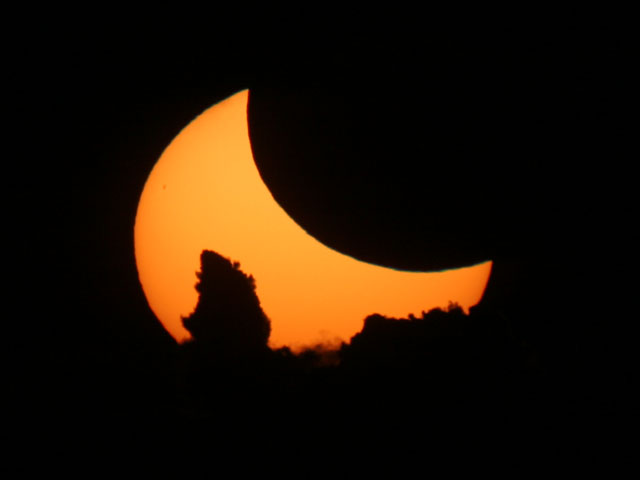
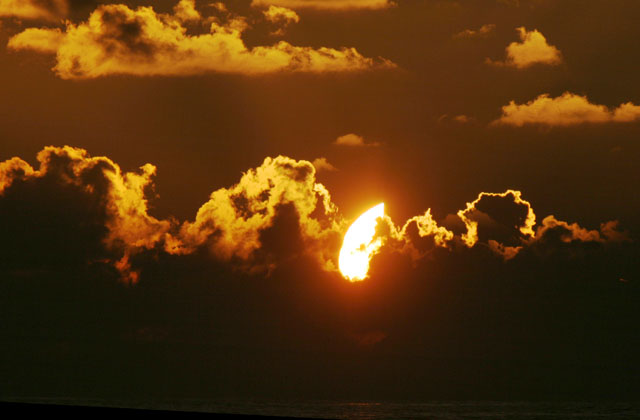
Beside the partial eclipse on the 14th of October 2004, Martin could photographed another atmospheric light phenomena.
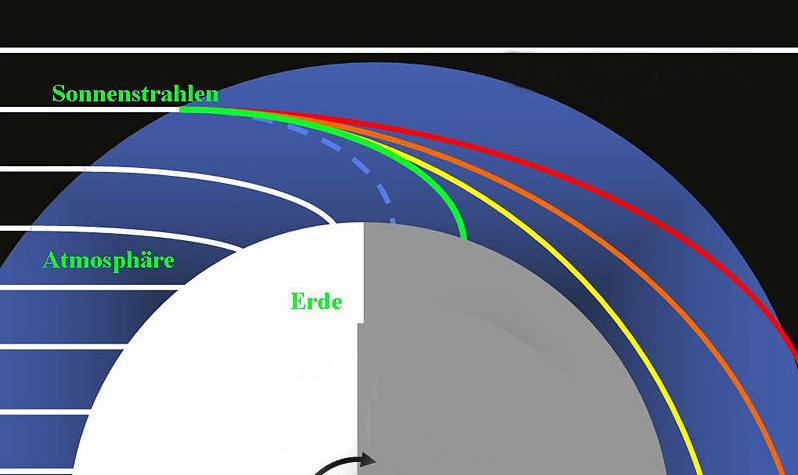
The ‚green flash' or the green jet results from wavelength dependence. Because the bending of the sunlight is in the blue range stronger than in the red range, the red portion sinks under the sun disk whereby the green and the blue portion rather can bee seen over the sun disk. Our sphere-shaped atmosphere acts as a lens to lift the sun’s image. The blue and green 'suns' are lifted more than the red one, but we rarely see the blue rim because blue light is mostly scattered away to form the sky color above us.
The short-wave (green, blue) part is could be seen after ‚the actual' sunset. The so-called “green flash” or “green jet” can be visible for a fraction of seconds and in the rarest case you recognise a “blue flash” With these absolute photo rarities Martin was successful to take up even the "blue flash“. I have to admitt that I never saw a ‚blue flash' photo before.
and a scetch map clarifies a little this light physics.
|
|
Etna
Stromboli
Volcano world
From Etna to Stromboli
Planets & Space
©2020,
This private, non-commercial web site
do not use cookies! |